Who Pays When a Tree Falls? A Plain-English Guide for Alabama Homeowners
Quick answer
- Tree falls on your house: your home insurance usually pays.
- Neighbor's tree falls on your house: still your own insurance first.
- Tree falls on your car: the storm part of your car insurance (called comprehensive).
- Dead or ignored tree: the owner may be to blame.
The simple rule: it comes down to why the tree fell and what it landed on.
If you've lived in Alabama long, you've seen the post in your community Facebook group after a storm: "Big oak down, anybody know a good tree guy?" Right after "Is everyone okay?" comes the next question: who pays for this?
As a local Alabama agency, we hear this a lot after a rough storm. The answer usually depends on what the tree hit, not whose yard it grew in. Here's how it usually works with most home insurance. Every policy is different, so use this as a guide and check your own policy.
Not sure what your policy says? We're glad to look it over with you. No pressure, no sales pitch. Get a free quote or policy review, or call or text us at 205-847-5616.
Who Pays? At a Glance
| What happened | Whose insurance pays | Good to know |
|---|---|---|
| Your tree fell on your house | Your home insurance | You pay your deductible first |
| Your tree fell on your neighbor's house | Your neighbor's home insurance | You may be to blame if the tree was dead or ignored |
| Your neighbor's tree fell on your house | Your home insurance | Your company may go after the neighbor if the tree was neglected |
| A tree hit your fence, shed, or detached garage | Your home insurance | The amount for these is often smaller |
| A tree fell on your car | Your car insurance (comprehensive) | Not covered if you only carry liability |
| A tree fell and hit nothing | Often nobody | Some policies pay if it blocks your driveway or a ramp |
A Tree Fell on My House. Who Pays?
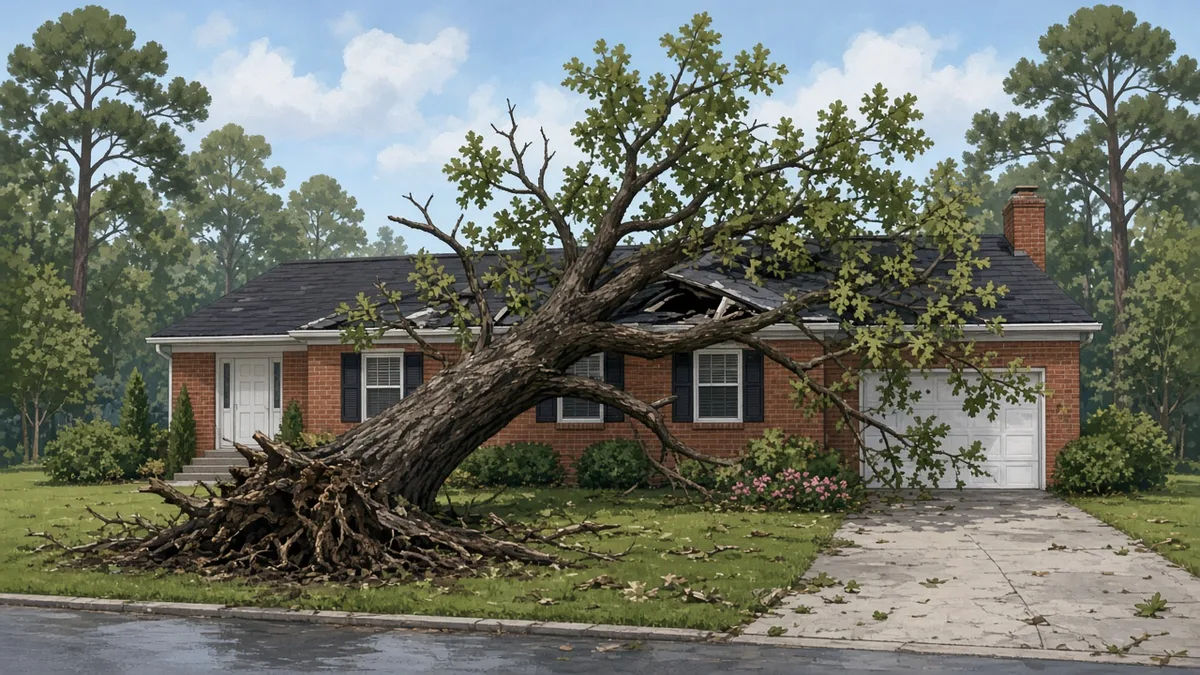 Your tree, your house: your home insurance usually pays.
This is the simplest one. Your home insurance usually pays to fix your house when a tree falls on it, whether wind, lightning, or ice brought it down. It usually also includes a limited amount, often $500 to $1,000, to remove the tree. That amount is different from policy to policy.
You'll pay your deductible first. (Your deductible is the part of a claim you pay before insurance pays the rest.) If wind knocked the tree down, you may have a separate, often bigger, wind and hail deductible (more on that below).
My Tree Fell on My Neighbor's House. Who Pays?
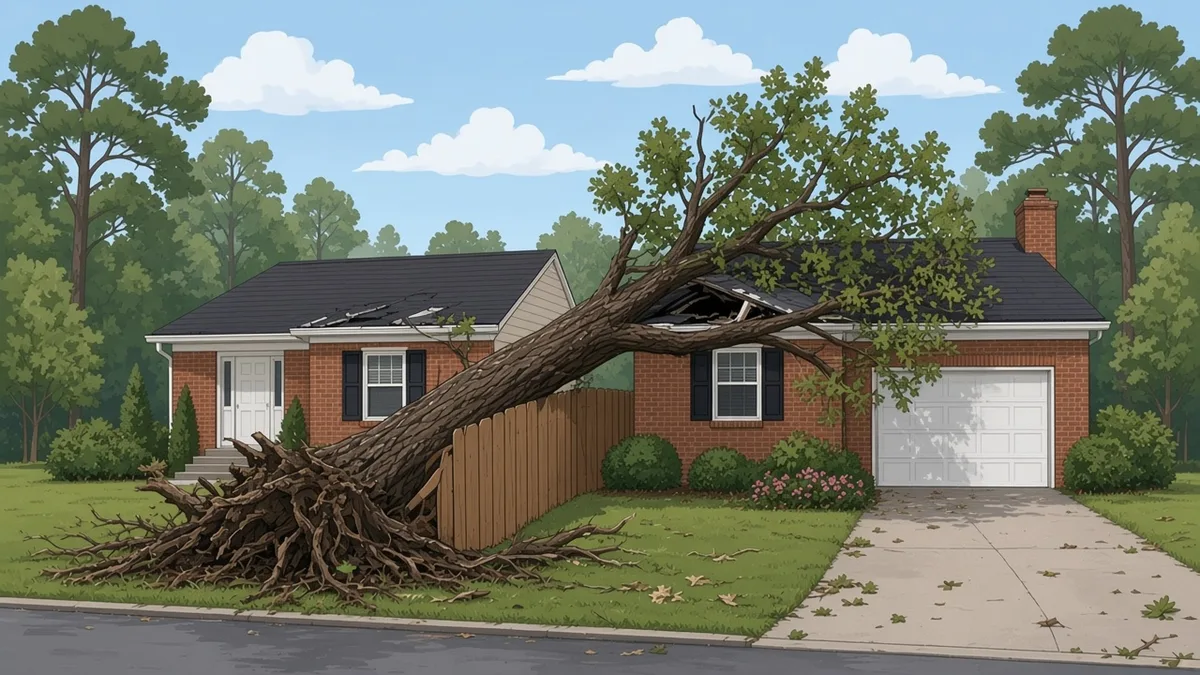 Your tree, their house: their home insurance usually pays.
This one surprises folks. If a healthy tree from your yard blows over onto your neighbor's house in a storm, your neighbor's home insurance usually pays to fix their home. Insurance generally treats a storm as nobody's fault. People sometimes call this an "act of God," which just means something nobody could control or prevent, like a storm.
The exception is when the tree owner was careless. If the tree was clearly dead, dying, or leaning, and especially if your neighbor had told you about it, you could be blamed for the damage. If so, the part of your own home insurance that pays when you're responsible for damage to someone else (called liability coverage) may help.
My Neighbor's Tree Fell on My House. Who Pays?
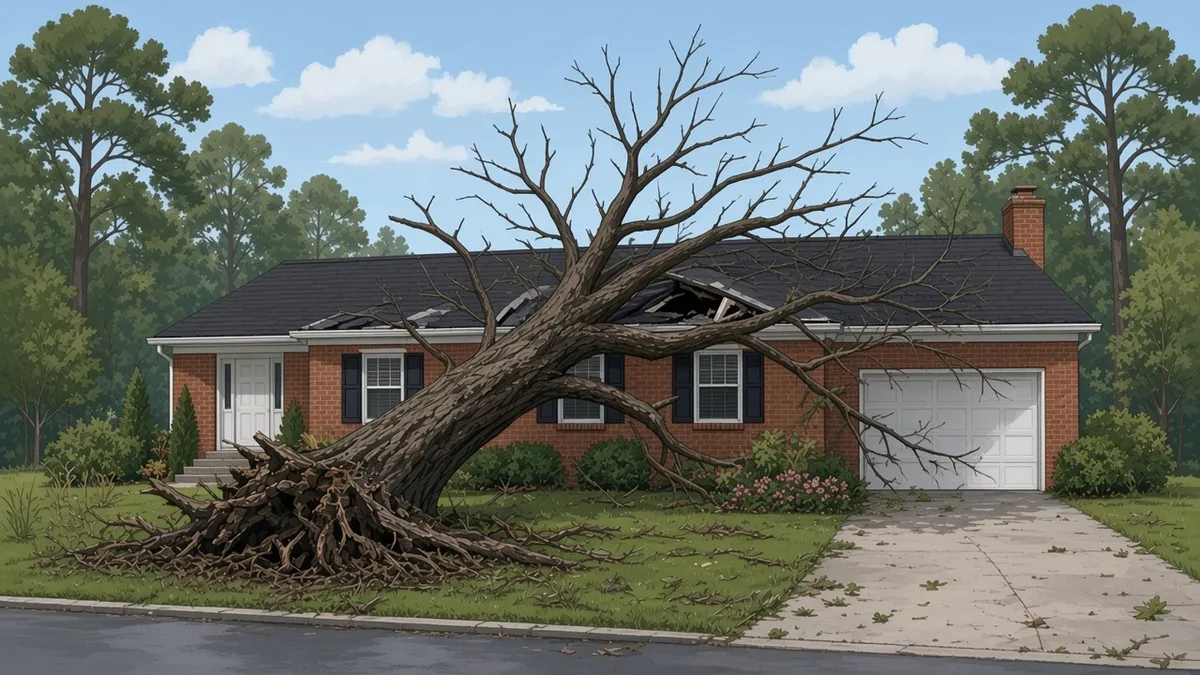 Neighbor's tree, your house: start with your own insurance.
Same idea, flipped around. If your neighbor's tree lands on your house, your own home insurance generally pays for the damage it covers, minus your deductible.
If the tree was clearly dead or neglected, and especially if you'd warned your neighbor in writing, your insurance company may go after your neighbor or their insurance to get its money back. If that works, you may get some or all of your deductible back too. Either way, you usually start by calling your own insurance company.
A Tree Hit My Fence or Shed. Is That Covered?
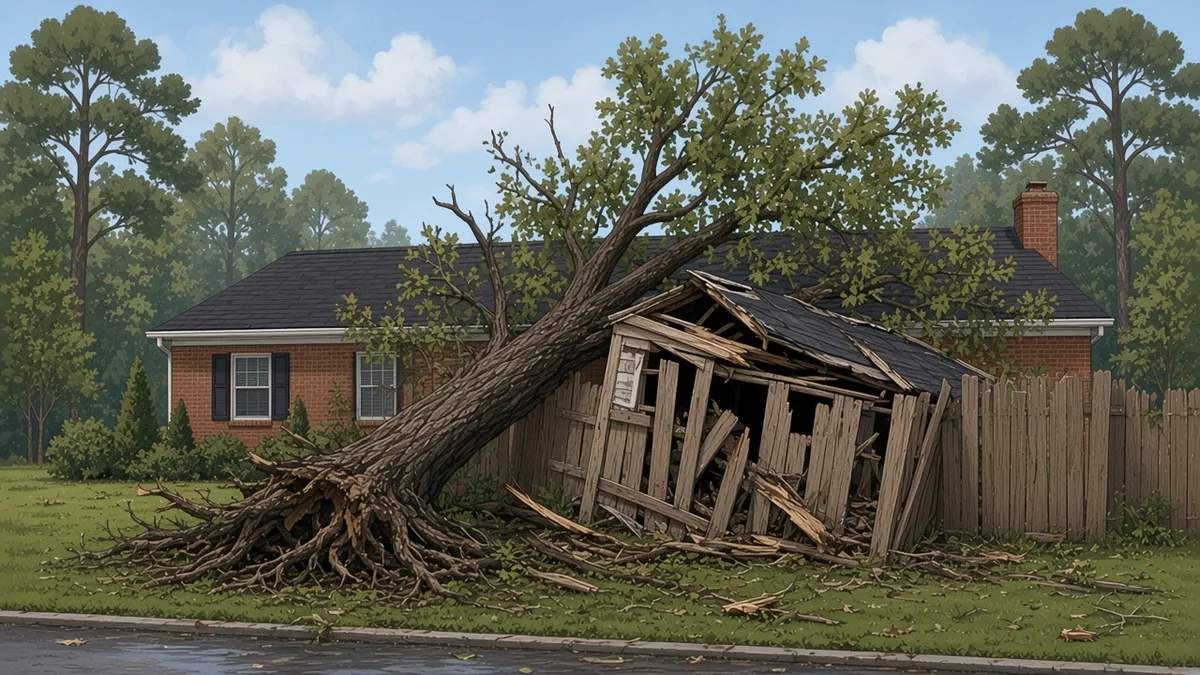 Fences and sheds: usually covered, but often for a smaller amount.
Fences, sheds, detached garages, and carports are usually covered by a separate part of your home insurance for buildings and structures that aren't attached to your house. On many policies, that coverage is a set amount, often figured as a percentage of your home's coverage amount.
The catch? If you have a nice workshop or a long fence, that amount may not go as far as you'd expect. Some policies also pay for wood fences and similar structures based on their age and wear, so an older fence gets less money than it would cost to build a new one. This is one of the most common coverage gaps we see in homeowners policies.
A Tree Fell on My Car. Who Pays?
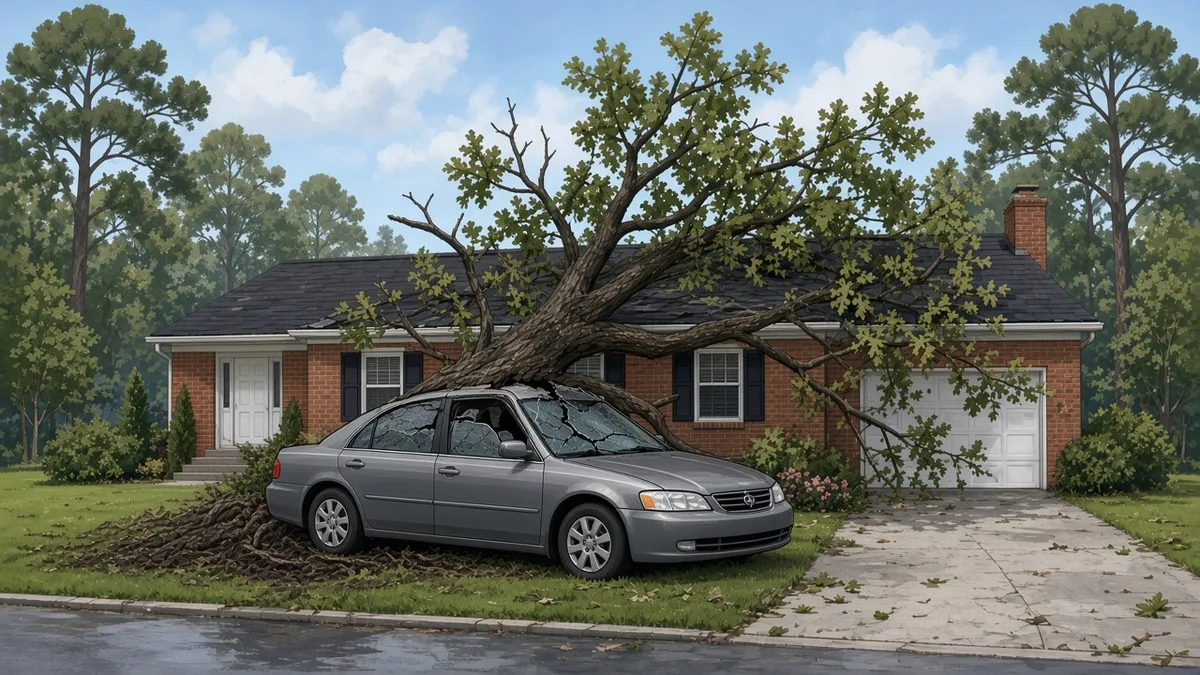 Tree on your car: your car insurance, not your home insurance.
Here's where people get tripped up: home insurance usually does not cover your car, even if it was parked in your own driveway. A tree falling on your car is usually covered by the comprehensive part of your car insurance (the part that covers things like storms, falling objects, and theft), minus that coverage's deductible.
If you carry only the bare-minimum liability coverage on your car, a falling tree generally won't be covered. If you dropped comprehensive on an older car, this is worth a second look.
A Tree Fell but Didn't Hit Anything. Will Insurance Pay?
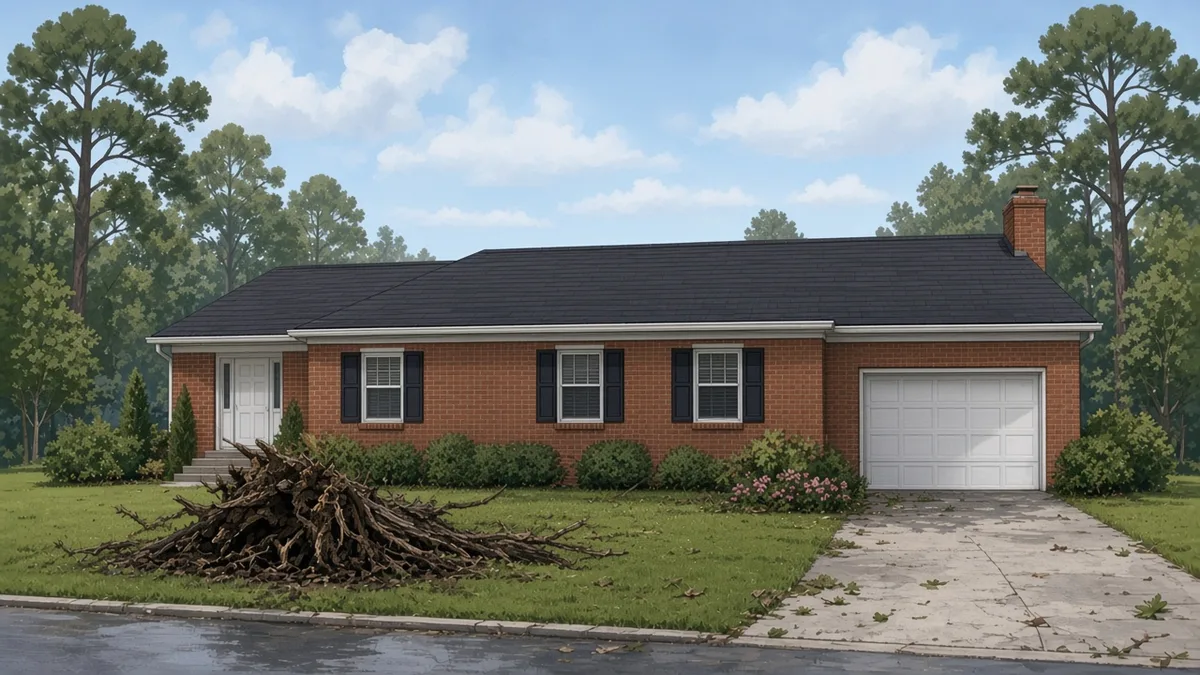 Tree hits nothing: often not covered, with a few exceptions.
A big pine across the backyard is a real headache, but insurance may not pay for it. If a fallen tree doesn't damage your house or another covered building, many policies don't pay to haul it away, or pay only a small amount.
Many policies (but not all) make an exception when the tree blocks your driveway or a ramp built for someone with a disability. Some policies have no such exception at all. Tree removal limits are often modest, commonly $500 to $1,000 per loss, sometimes with a $500 per-tree cap. Some upgraded policies offer more. Check your policy.
Good to know: The tree removal amount is the most your policy pays per storm, no matter how many trees fall. Some policies also cap how much they pay for each tree.
Policies often cap tree removal at a few hundred to a few thousand dollars, and removing a large tree can cost more than that. Check your policy.
Want to know your actual limits before the next storm? We can walk you through it in a few minutes. Request a quote or review here, or call or text 205-847-5616.
Does the Cause Matter?
Yes. Why the tree fell makes a big difference.
| Why the tree fell | Is it covered? |
|---|---|
| Wind, lightning, ice, or hail | Usually covered, after your deductible (often a separate wind/hail deductible) |
| Rot, or a dead tree that was ignored | Neglect can lead to a denied claim, or the owner being blamed |
| Flood | Needs a separate flood policy |
| Earthquake | Not covered unless you add it |
One more thing: if your neighbor's rotten tree falls on your house in a storm, your own policy generally still covers your home.
How Much Will Insurance Pay to Remove a Fallen Tree?
Most home policies typically pay a limited amount to remove a fallen tree, commonly $500 to $1,000 per loss, sometimes with a $500 per-tree cap. Some policies let you add an upgrade that raises this. Your exact amount depends on your policy, so give us a call at 205-847-5616 and we'll look at yours.
Get a free quote or policy review
Dead or Neglected Trees: Why Upkeep Matters
Home insurance is meant for sudden accidents, not problems that build up over time. If a tree was clearly dead, rotting, or hollow and nothing was done, the insurance company may question the claim, or a neighbor may blame you for the damage.
Warning signs a tree may be seen as neglected:
- No leaves when it should have them
- Bark falling off
- Mushrooms growing at the base
- A heavy lean
- A neighbor has warned you about it in writing
The takeaway: if a tree looks sick, deal with it sooner rather than later. If it's your neighbor's, a friendly note (keep a copy) can make a big difference later.
Alabama Wind and Hail Deductibles
Here in Alabama, many home policies have a separate deductible for wind and hail damage. It may be a percentage of your home's coverage amount or a flat dollar amount. For example (just an illustration), a 2% deductible on a home insured for $250,000 means you pay the first $5,000 of a wind claim. Homes in coastal and south Alabama counties may also have a separate hurricane deductible with higher minimums. That applies to hurricanes and tropical storms, not every windy day.
Since most tree damage comes from storms, this matters. Learn more in our guide to wind and hail deductibles in Alabama, or our broader explainer on how home insurance deductibles work.
Roof Coverage: Paying for a New Roof vs. an Older One
If a tree damages your roof, how your policy pays for it matters. Some policies pay what it costs to fix or replace the roof with similar materials today, up to your policy's limits. Others subtract money for the roof's age and wear, so an older roof may get much less. Several insurance companies pay for roof damage using a set chart based on the roof's age and material, even when the rest of the home is covered at today's full cost. On an older roof, that can mean a much smaller check. Some companies require this chart once a roof reaches a certain age, so it's worth knowing your roof's age and how your policy pays for it.
Here's our full breakdown of replacement cost vs. actual cash value, the insurance terms for these two ways of paying.
What to Do After a Tree Falls
- Stay safe first. Keep away from downed power lines and call your power company. Don't climb on a damaged roof.
- Take photos and video of the tree, the damage, and the area around it before anything is moved.
- Stop more damage. Tarp the roof or board up openings if it's safe. Most policies expect you to take reasonable steps to protect your home, and those costs are often covered.
- Call your agent as soon as you can to start the claim. Not sure it's worth filing? Give us a call first and we'll help you think it through.
- Keep every receipt: tarps, tree removal, hotel stays, meals if you can't stay home. If damage your policy covers makes your home unsafe to live in, your policy may help pay extra living costs.
Our step-by-step guide on how to file a home insurance claim in Alabama walks through the rest.
A Few Ways to Prevent Tree Trouble
- Have large trees near the house checked by a certified tree expert (arborist) every few years.
- Trim limbs that hang over your roof, driveway, or power lines.
- Watch for warning signs: dead branches, mushrooms at the base, cracks, hollow spots, or a new lean.
- Review your coverage before storm season, not after.
Frequently Asked Questions
Does home insurance pay to remove a fallen tree? If it damaged your house or another covered building, policies typically pay a limited amount to haul it away, commonly $500 to $1,000 per loss. If it hit nothing, often little or nothing. Many (not all) policies make an exception when it blocks a driveway or disability ramp.
My neighbor's tree fell on my house. Do I file with their insurance? Usually you file with your own insurance company. It may go after your neighbor to get its money back if they were careless.
Is a tree falling on my car covered by home insurance? Generally no. That's usually covered by the comprehensive part of your car insurance.
What if the tree was already dead? It can make things harder. The owner may be blamed for the damage, and insurance companies may look closely at whether the tree was cared for.
Will my wind deductible apply to tree damage? If wind brought it down, it may. In Alabama that deductible may be a percentage of your home's coverage amount or a flat dollar amount.
Have Questions? Your Neighbors at TCDS Are Here to Help
Storms are stressful enough without guessing about your coverage. As a local, independent Alabama agency, we can look over your policy, explain it in plain English, and compare options from several insurance companies we're appointed with if something doesn't fit.
Get your free quote or policy review, or call or text us at 205-847-5616.
This article is general information, not a promise of coverage. Coverage depends on your specific policy, insurance company, and what happened.
Sources & References
- [1]Alabama Department of Insurance. Natural Disasters Guide: separate wind, hail and hurricane deductibles; ACV vs. replacement cost. View Source (Accessed October 19, 2026)
- [2]Insurance Information Institute (Triple-I). Am I Covered? Tree damage to your roof and tree removal. View Source (Accessed October 19, 2026)
- [3]Maryland Insurance Administration. Fallen Tree: own vs. neighbor's tree, subrogation, removal limits, cars. View Source (Accessed October 19, 2026)
- [4]Texas Department of Insurance. FAQ: Homeowners insurance and disaster claims (trees on homes, yards, driveways and cars). View Source (Accessed October 19, 2026)
Policy forms reviewed
Coverage details were checked against Alabama homeowners policy forms and rate/rule manuals in our carrier library (October 2026). Limits change, so always confirm with your own declarations page.
- ISO HO 00 03 05 11 Homeowners 3 – Special Form, Additional Coverages: Trees (p. 5–6)
- Foremost Signature HP2000 01/18 Additional Coverages (tree removal, p. 5); HP4500 06/24 Scheduled Roof
- Safeco HOM-7030/EP 11/19 Alabama Homeowners Policy (tree removal p. 13; fences and roof surfacing p. 17–18)
- Allstate AVP81 House and Home Policy, Alabama (p. 13); Allstate Alabama HO rate manual, tropical cyclone deductible (p. 11–12)
- ASI HOH-AL 04/22 Homeowners Policy, Alabama (tree removal, p. 7)
- Travelers Alabama HO manual (TCIC), windstorm/hail and hurricane deductibles (p. 98–99)
- National General Alabama homeowners underwriting guide 04/2023 (roof payment schedule)