
Nashville Flood Zone Map: Check Your Address and Understand the Result
Looking for your Nashville or Davidson County flood zone? Enter your address in the lookup below (free, no signup) or use FEMA's Flood Map Service Center. Once you know your zone, compare NFIP and private flood options for that address.
Editorial update: September 14, 2026. Historical survey dates and coverage assumptions are unchanged.
What the address lookup can and cannot tell you
This site's address lookup reads FEMA's National Flood Hazard Layer; it is a starting point, not a survey, lender determination or guarantee that a property will not flood. An address match may locate a parcel rather than the exact building. A missing result is not proof of low risk.
Confirm the building location, effective map and any map-change documents through FEMA or Metro Nashville. We do not assign a zone to a ZIP code. A map label alone does not set your insurance price or settle a lender's requirement.
If the address lookup is unavailable or places the pin incorrectly, use Metro Nashville's flood-information tool or ask Metro Water Services for the map panel, effective date and any elevation certificate on record.
To get a flood quote, have the property address, building use, foundation details, requested building and contents limits, and any lender requirement ready. Compare the effective date and waiting period as well as the premium; a map result is not an insurance quote.
Check Your Nashville Flood Zone Status
Enter your Nashville-area address. We use the U.S. Census geocoder and FEMA's official National Flood Hazard Layer to look up your FEMA flood zone. No signup required.
Data source: FEMA National Flood Hazard Layer (NFHL). This is not a legal flood-zone determination.
Want us to compare flood options for your address?
The map resources above are free to use without this form. If you want help comparing eligible flood coverage, you can request it here. A map label is not a price, and submitting the form does not purchase or activate insurance.
Request a Nashville flood insurance comparison
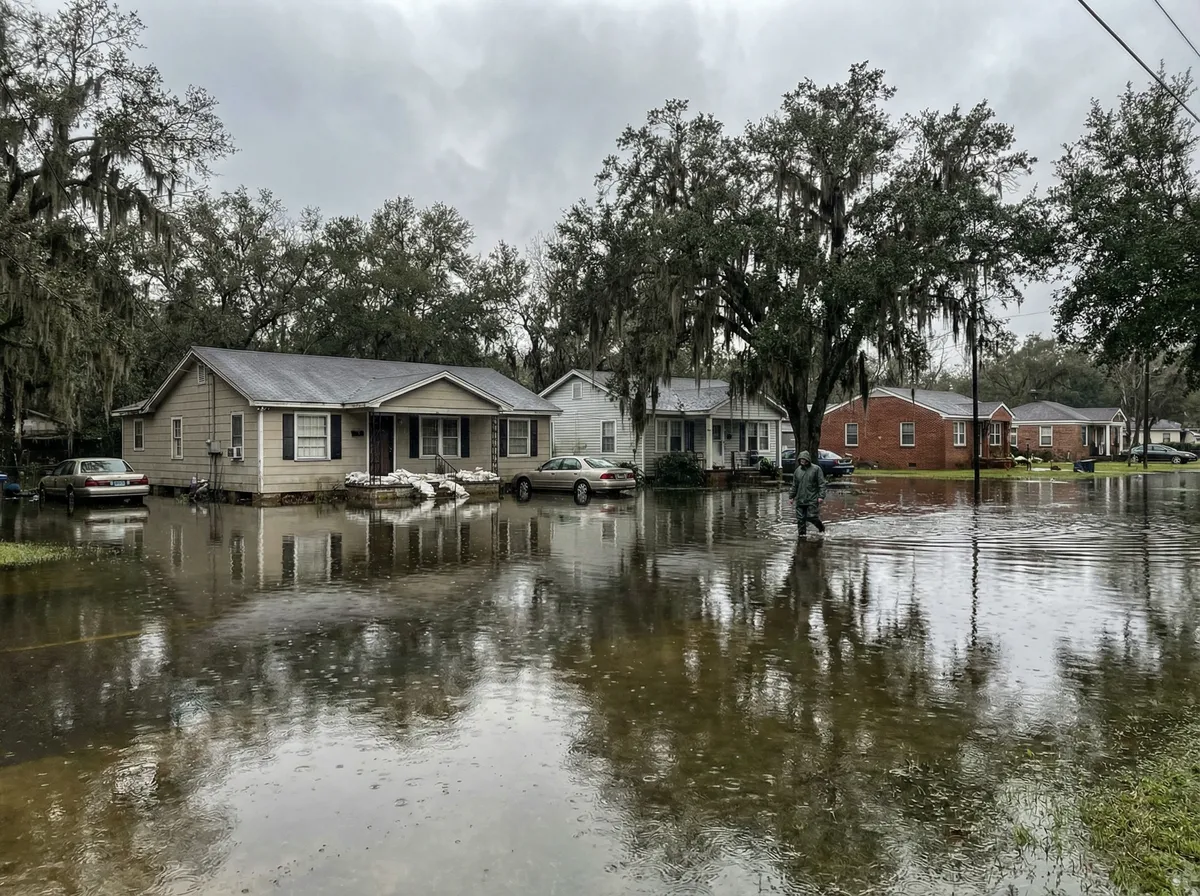
Official flood maps (not a TCDS drawing)
Open these public sources to see the same FIRMs lenders and floodplain managers use. These maps, not this guide, draw the zone lines. A ZIP code is not a zone.
- FEMA Flood Map Service Center — official Flood Insurance Rate Maps for Davidson County
- Metro Nashville — Know Your Flood Hazard — how FIRMs work locally; Metro Water Services can interpret a parcel
- FloodSmart.gov — NFIP zone definitions and why Zone X still floods
May 2010: The Flood That Changed Everything
On May 1–2, 2010, Nashville received over 13 inches of rain in 36 hours—nearly double the previous two-day rainfall record. The Cumberland River crested at 51.86 feet, almost 12 feet above its 40-foot flood stage. What followed was the costliest non-hurricane flood disaster in U.S. history at the time.
2010 Nashville Flood: By the Numbers
$2B+
Total estimated damage
11,000+
Properties damaged in Davidson County
26
Deaths across Tennessee
51.86 ft
Cumberland River crest (flood stage: 40 ft)
The Grand Ole Opry House was submerged. The Opryland Hotel evacuated 1,500 guests. The Schermerhorn Symphony Center suffered $42 million in damage. Thousands of homes in Bellevue, Antioch, and along Mill Creek were destroyed or severely damaged.
Here is the detail that should keep every Nashville homeowner up at night: many of the hardest-hit properties were not in FEMA-designated flood zones. Homeowners who believed they were safe—because their mortgage lender never required flood insurance—lost everything with no coverage to rebuild.
Understanding Nashville’s FEMA Flood Zones
FEMA divides Nashville into flood zones based on statistical probability. These zones are mapped on Flood Insurance Rate Maps (FIRMs) and determine both your insurance requirements and your premiums. Here is what each zone means for your property.
| Flood Zone | Risk Level | Annual Flood Chance | Insurance Required? | Nashville Context |
|---|---|---|---|---|
| Zone AE | High Risk | 1% per year (100-year flood) | Yes, if federally-backed mortgage | Along Cumberland River, Mill Creek, Harpeth River corridors |
| Zone A | High Risk | 1% per year | Yes, if federally-backed mortgage | High-risk areas without detailed elevation studies |
| Zone X (shaded) | Moderate Risk | 0.2% per year (500-year flood) | No, but strongly recommended | Areas adjacent to high-risk zones; many 2010 flood victims were here |
| Zone X (unshaded) | Minimal Risk | Less than 0.2% per year | No, but still recommended | Higher elevations, away from waterways; still not immune |
Important: “100-Year Flood” Is Misleading
A “100-year flood” does not mean it happens once every 100 years. It means there is a 1% chance of that level of flooding in any given year. Over a 30-year mortgage, a property in Zone AE has a 26% chance of flooding at least once. Nashville has experienced multiple “100-year” flood events in the past two decades.
Nashville’s Highest-Risk Flood Areas: Neighborhood by Neighborhood
Nashville’s flood risk is shaped by six major waterways that wind through the metro area. Each creates its own corridor of risk, and understanding which waterway affects your neighborhood is the first step toward proper protection.
Mill Creek Corridor
Neighborhoods: Antioch, Woodbine, Southeast Nashville, Nolensville Pike corridor
Mill Creek is Nashville’s most flood-prone waterway. The U.S. Army Corps of Engineers has conducted multiple studies on Mill Creek flooding, and the corridor saw some of the worst damage in 2010. Rapid development in Antioch and along Nolensville Pike has increased impervious surfaces, making runoff worse with each new construction project. Properties within a half-mile of Mill Creek should carry flood insurance regardless of their FEMA zone designation.
Harpeth River Floodplain
Neighborhoods: Bellevue, West Nashville, Kingston Springs, Franklin
The Harpeth River’s flood stage at Bellevue is 20 feet, and the river has exceeded this level multiple times since 2010. The Harpeth’s winding path through western Davidson County creates wide floodplains that can inundate neighborhoods rapidly. Bellevue was one of the hardest-hit areas in the 2010 flood, with entire subdivisions underwater. The Harpeth Conservancy continues to monitor and advocate for flood mitigation in this corridor.
Cumberland River
Neighborhoods: Downtown, East Nashville, Bordeaux, Germantown, The Nations
The Cumberland River is the main artery through Nashville, and when it floods, the impact is citywide. The river crested at nearly 52 feet in 2010—12 feet above flood stage. While the Army Corps of Engineers manages upstream dams to mitigate flooding, the Cumberland remains a significant risk for properties along its banks. The rapid development of East Nashville and The Nations has put more property value in harm’s way.
Whites Creek
Neighborhoods: North Nashville, Joelton, Whites Creek community
Whites Creek drains a large watershed in northern Davidson County and is prone to flash flooding during heavy rain events. The relatively rural character of parts of this watershed means less infrastructure to manage stormwater, and properties near the creek can flood quickly with little warning.
Stones River
Neighborhoods: Donelson, Hermitage, East Davidson County
The Stones River flows through eastern Davidson County before joining the Cumberland. Properties in Donelson and Hermitage near the river face flood risk that is often underestimated because these neighborhoods feel suburban and removed from downtown’s waterfront. Percy Priest Dam provides some flood control, but extreme events can still overwhelm the system.
Browns Creek
Neighborhoods: South Nashville, Wedgewood-Houston, Chestnut Hill
Browns Creek runs through some of Nashville’s fastest-gentrifying neighborhoods. As Wedgewood-Houston transforms from industrial to residential, more homeowners are moving into areas with significant flood history. The combination of aging stormwater infrastructure and increased development density makes this corridor particularly vulnerable to urban flooding.
How to Find and Read Your Nashville Flood Map
Knowing your flood zone is not optional—it is essential. Here is how to look up your property and understand what you find.
Step-by-Step: Find Your Nashville Flood Zone
- Visit FEMA’s Flood Map Service Center at msc.fema.gov
- Enter your Nashville address in the search bar
- Review your flood zone designation (AE, A, X shaded, or X unshaded)
- Check the map effective date—Nashville maps were significantly updated after 2010
- Note the Base Flood Elevation (BFE) if you are in Zone AE—this is the water level FEMA expects during a 100-year flood
- Compare your home’s lowest floor elevation to the BFE—the difference directly affects your premium
If your property is in Zone AE, the relationship between your lowest floor elevation and the Base Flood Elevation is the single most important factor in your flood insurance premium. A home with its lowest floor 2 feet above the BFE will pay dramatically less than one at or below the BFE. An Elevation Certificate, prepared by a licensed surveyor, documents this relationship and can save you hundreds or thousands per year on premiums.
Risk Rating 2.0: What Changed for Nashville Homeowners
In October 2021, FEMA rolled out Risk Rating 2.0, a fundamental overhaul of how flood insurance premiums are calculated. The old system relied heavily on whether your property was inside or outside a flood zone line on a map. The new system is far more granular.
What Risk Rating 2.0 Considers
Old System (Zone-Based)
- • Flood zone (in or out)
- • Base Flood Elevation
- • Building elevation
- • Building type
New System (Risk Rating 2.0)
- • Distance to nearest water source
- • Type of water source (river, creek, coast)
- • Flood frequency for the specific location
- • Rainfall intensity
- • Building replacement cost
- • Building characteristics (foundation, floors)
- • Historical claims data
For Nashville homeowners, Risk Rating 2.0 has created winners and losers. Properties that were overcharged under the old system—perhaps in Zone AE but on higher ground—may see lower premiums. Properties that were undercharged—perhaps in Zone X but very close to Mill Creek—may see significant increases. FEMA has capped annual increases at 18% per year, so some Nashville homeowners are seeing gradual premium increases that will continue for years.
TCDS Tip: Get a Second Quote
Risk Rating 2.0 applies only to NFIP policies. Private flood insurers use their own rating models, and in many cases, private carriers can offer Nashville homeowners lower premiums than the NFIP—especially for properties that saw increases under Risk Rating 2.0. We always compare both options.
Who Needs Flood Insurance in Nashville? (Everyone.)
Let us be direct: every Nashville homeowner should carry flood insurance. Here is why.
Your homeowners insurance does not cover floods. This is not a gap or a loophole—it is a blanket exclusion. No standard homeowners policy in Tennessee covers flood damage. Not State Farm, not Allstate, not Travelers, not any carrier. If water enters your home from outside (rising water, overflowing creeks, storm surge), your homeowners policy pays zero.
FEMA flood maps are imperfect. Flood maps are based on probability models, not certainty. They use historical data and statistical analysis, but they cannot predict every flood scenario. Nashville’s rapid development changes drainage patterns constantly. A property that was safe 10 years ago may be at risk today because of upstream construction.
The numbers do not lie. FEMA reports that roughly a quarter of NFIP flood claims come from properties outside high-risk flood zones — the same figure we use on our Tennessee flood insurance hub. The 2010 flood is the local proof.
Flood Insurance: Required vs. Recommended
If your property is in Zone A or AE and you have a federally-backed mortgage (FHA, VA, USDA, Fannie Mae, Freddie Mac), your lender will require flood insurance.
If you are in Zone X (shaded) or within a half-mile of any Nashville waterway. Also if you are in Zone A/AE with no mortgage or a non-federally-backed mortgage.
Check the actual building location rather than assuming a zone from a neighborhood name. The historical Tennessee NFIP benchmark of about $1,220/year is not a Zone X quote. Actual rates depend on your specifics; get a real quote for accurate pricing.
NFIP vs. Private Flood Insurance: Which Is Right for Your Nashville Home?
Nashville homeowners have two paths to flood coverage: the federal National Flood Insurance Program (NFIP) or private flood insurance carriers. Each has advantages.
| Feature | NFIP | Private Flood Insurance |
|---|---|---|
| Max Dwelling Coverage | $250,000 | Request available building limits for your property |
| Max Contents Coverage | $100,000 | Request available contents limits and terms |
| Additional Living Expense | Not included | Often included |
| Basement Coverage | Very limited | Varies; often more generous |
| Waiting Period | 30 days | Confirm the carrier's waiting period and effective date |
| Pricing Model | Risk Rating 2.0 (FEMA) | Carrier’s proprietary model |
| Accepted by All Lenders? | Yes | Most lenders accept; verify first |
For Nashville homes valued over $250,000—which includes most of the metro area in 2026—the NFIP’s dwelling coverage cap is a serious limitation. If your home would cost $450,000 to rebuild and you only have $250,000 in flood coverage, you are carrying a $200,000 gap. Private flood insurance can close that gap, often at competitive premiums.
What Flood Insurance Does—and Does Not—Cover
Flood insurance is not the same as homeowners insurance, and the coverage differences matter. Understanding what is and is not covered prevents surprises during the worst moments.
Typically Covered
- • Structural damage (walls, floors, foundation)
- • Electrical and plumbing systems
- • HVAC equipment, water heaters, furnaces
- • Permanently installed carpeting, cabinets
- • Appliances (refrigerator, stove, dishwasher)
- • Personal belongings (furniture, clothing, electronics)
- • Washer/dryer in living area
Typically NOT Covered
- • Temporary living expenses (NFIP)
- • Landscaping, decks, patios, fences
- • Currency, precious metals, stock certificates
- • Cars and other vehicles
- • Mold or mildew that could have been prevented
- • Sewer backup (unless flood-related)
- • Financial losses from business interruption
7 Ways to Lower Your Nashville Flood Insurance Premium
Get an Elevation Certificate
An Elevation Certificate documents building characteristics and elevation. First ask the local floodplain manager whether one is already on file. It may help identify discounts, but savings are not guaranteed; ask your agent before paying for a new certificate.
Compare NFIP and Private Flood Quotes
Private carriers use different rating models than FEMA. For many newer, elevated, or Zone X homes, private flood can undercut NFIP — the same comparison we run on the Tennessee flood hub. Always quote both.
Raise Your Deductible
Request the actual premium and deductible options for both building and contents coverage. A larger deductible can reduce the premium but increases the amount you retain after a covered loss. Do not assume a fixed savings percentage or choose an amount you cannot fund.
Elevate Utilities and Mechanical Systems
Moving your HVAC, water heater, and electrical panel above the Base Flood Elevation reduces flood damage to those systems and can improve how Risk Rating 2.0 prices the building. Ask for a quote with and without those details rather than assuming a dollar savings.
Install Flood Vents
Engineered flood vents in your foundation allow water to flow through rather than building up pressure against walls. Properly installed flood vents can qualify you for lower premiums and reduce structural damage during a flood.
Request a LOMA or LOMR
If you believe the effective map does not reflect your building's location or elevation, ask the local floodplain manager about FEMA's map-change process and required evidence. An approved change does not guarantee a lower premium or remove every lender requirement.
Work with an Independent Agent
Captive agents can only offer their company’s flood product. An independent agent like TCDS can compare NFIP, private flood carriers, and excess flood policies to find the best combination of coverage and price for your specific Nashville property.
The Bottom Line
The 2010 Nashville flood is a reason to take flood preparation seriously, not a prediction of your property's next loss. Use the effective official map, local floodplain guidance and the actual building details together when evaluating your options.
Standard homeowners insurance generally excludes flood damage. Whether your property is in Zone AE or Zone X, compare its risk, available coverage, deductible and premium rather than assuming the map label answers every insurance question.
Need help understanding your Nashville flood risk? Call TCDS Insurance at (615) 989-6444 or request a free flood insurance quote below. We can help interpret the map and compare eligible NFIP and private options. Coverage starts only on the effective date confirmed by the insurer, subject to policy terms.
Sources & References
Nashville flood map and insurance questions
What flood zone is my Nashville property in?
You can find your Nashville flood zone by visiting FEMA's Flood Map Service Center at msc.fema.gov and entering your address. Nashville properties fall into Zone AE (high-risk with base flood elevations), Zone A (high-risk without elevations), Zone X shaded (moderate risk, 500-year floodplain), or Zone X unshaded (minimal risk). You can also contact Nashville Metro Water Services or call TCDS Insurance at (615) 989-6444 for a free flood zone lookup.
Do I need flood insurance in Nashville if I'm not in a flood zone?
Yes, flood insurance is strongly recommended even outside high-risk zones. FEMA reports that roughly a quarter of National Flood Insurance Program claims come from properties outside designated high-risk flood areas. During the 2010 Nashville flood, thousands of homes that were NOT in FEMA flood zones were devastated. Standard homeowners insurance does not cover flood damage regardless of your zone.
How much does flood insurance cost in Nashville?
There is no single Nashville figure. FEMA's pricing considers property-level factors such as distance to water, elevation and rebuilding cost. The Tennessee NFIP benchmark of about $1,220 per year is the historical reference retained from our August 2026 content, not a refreshed survey or an address-specific quote. Compare eligible NFIP and private options using the same requested limits. Actual rates depend on your specifics; get a real quote for accurate pricing.
What is the difference between Zone AE and Zone X in Nashville?
Zone AE identifies a high-risk Special Flood Hazard Area with a 1% annual-chance flood hazard and mapped base flood elevations. Shaded Zone X generally describes moderate mapped risk and unshaded Zone X lower mapped risk, not zero risk. Lender requirements depend on the building, loan and applicable determination; a lender can require flood insurance outside a high-risk zone. Confirm the property-specific requirement with the lender.
What areas of Nashville flood the most?
Nashville's highest flood-risk areas include the Mill Creek corridor (Antioch, Woodbine, southeast Nashville), the Harpeth River floodplain (Bellevue, west Nashville), areas along the Cumberland River (downtown, East Nashville, Bordeaux), Whites Creek (north Nashville), Stones River (Donelson, Hermitage), and Browns Creek (South Nashville, Wedgewood-Houston). However, the 2010 flood proved that flooding can reach well beyond these known corridors.
What happened during the 2010 Nashville flood?
On May 1-2, 2010, Nashville received over 13 inches of rain in 36 hours—nearly double the previous two-day rainfall record. The Cumberland River crested at 51.86 feet, almost 12 feet above flood stage. The disaster caused over $2 billion in damage, 26 deaths across Tennessee, and damaged more than 11,000 properties in Davidson County alone. The Grand Ole Opry House, Opryland Hotel, and Schermerhorn Symphony Center ($42 million in damage) were all flooded.
What is FEMA Risk Rating 2.0 and how does it affect Nashville?
Risk Rating 2.0 is FEMA's updated flood insurance pricing methodology, effective since October 2021. Instead of relying solely on flood zone maps, it considers distance to water sources, flood frequency, rainfall intensity, building characteristics, and replacement cost. Some Nashville properties saw premiums decrease while others increased significantly. The goal is more equitable, risk-based pricing.
Does my Nashville homeowners insurance cover flooding?
Standard homeowners insurance generally excludes flood damage. Review flood coverage separately through the National Flood Insurance Program or an eligible private insurer. The property, cause of loss and policy wording determine coverage; the flood-zone label alone does not answer that question.
What is the difference between NFIP and private flood insurance?
The NFIP is the federal flood insurance program administered by FEMA with standardized coverage: up to $250,000 for the dwelling and $100,000 for contents. Private flood insurance is offered by private carriers and often provides higher coverage limits, additional living expense coverage, and sometimes lower premiums. TCDS compares both NFIP and private options to find the best fit for each Nashville homeowner.
Is there a waiting period for flood insurance in Nashville?
Yes. NFIP flood insurance policies have a standard 30-day waiting period before coverage takes effect. This means you cannot buy flood insurance when a storm is approaching and expect immediate coverage. Exceptions may apply for certain mortgage transactions, map changes, renewals or post-wildfire circumstances. Ask the insurer to confirm the effective date for your situation; a purchase alone does not guarantee an exception.
Free Nashville Flood Insurance Review
We will look up your flood zone and compare available NFIP and private flood options, coverage terms, and pricing for your address.
Related Articles
Your flood zone is only one input into what you pay. Homeowners weighing a move elsewhere in Tennessee often compare Franklin home insurance costs against the higher-elevation East Tennessee markets of Kingsport and Johnson City, where the risk is mountain flash flooding rather than the Cumberland River. The same zone check is on our Franklin, Memphis, Knoxville, and Chattanooga guides.