
Georgia Flood Insurance Guide: Inland Risk You Cannot Ignore
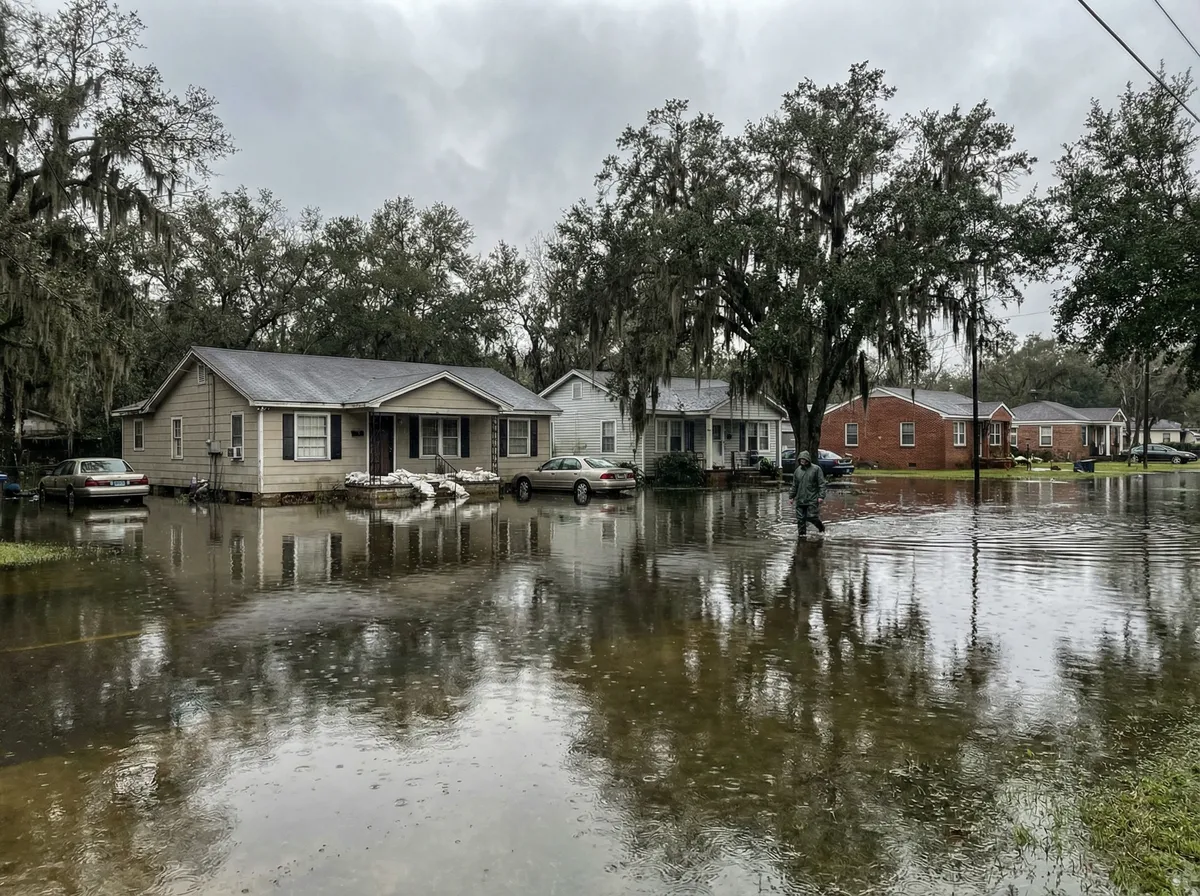
When most people think of flood risk in Georgia, they picture Savannah's coastal storm surge or the Golden Isles during hurricane season. But Georgia's most expensive and most frequent flood damage happens inland—in metro Atlanta, along the Chattahoochee River corridor, and in communities that most residents would never consider flood-prone. About 25% of all flood claims in Georgia come from properties outside designated flood zones.
This guide explains why standard homeowners insurance leaves Georgia homeowners completely exposed to flood damage, how FEMA's Risk Rating 2.0 has changed flood insurance pricing, and when private flood insurance makes more sense than the NFIP. Whether you live in Buckhead, Macon, or the Georgia mountains, this is the information you need.
Georgia's Flood Risk: Bigger Than You Think
Georgia ranks among the top 10 states for flood damage, and the risk is growing. The 2009 metro Atlanta floods caused over $500 million in damage, killing 10 people and damaging more than 20,000 homes. Many of those homes were outside FEMA flood zones, and most homeowners had no flood insurance.
The state's flood risk comes from three distinct sources:
- Inland riverine flooding: The Chattahoochee, Flint, Ocmulgee, and Savannah rivers regularly overflow during heavy rain events. The Chattahoochee corridor through metro Atlanta is particularly vulnerable.
- Urban flash flooding: Atlanta's rapid development has created vast areas of impervious surfaces (parking lots, roads, buildings) that channel rainwater into creeks and drainage systems faster than they can handle. Flash floods can occur within minutes of heavy rainfall.
- Coastal storm surge: Savannah, Brunswick, and the barrier islands face storm surge flooding during tropical storms and hurricanes. Sea level rise is increasing this risk annually.
Georgia Flood Facts
- 25% of Georgia flood claims come from outside designated flood zones
- $500M+ in damage from the 2009 metro Atlanta floods alone
- 20,000+ homes damaged in the 2009 floods—most without flood insurance
- Just 1 inch of floodwater can cause $25,000+ in damage to a typical home
Why Homeowners Insurance Does Not Cover Floods
This is the single most important thing Georgia homeowners need to understand: standard homeowners insurance does not cover flood damage. Period. It does not matter if the flood is caused by a hurricane, a thunderstorm, a river overflow, or a broken levee. If water enters your home from the ground up, your homeowners policy will not pay.
Your homeowners insurance covers water damage from above—a burst pipe, a leaking roof, wind-driven rain entering through a broken window. But the moment water rises from the ground and enters your home, it is classified as "flood damage" and is excluded from every standard homeowners policy sold in Georgia.
NFIP vs. Private Flood Insurance
National Flood Insurance Program (NFIP)
The NFIP is the federal government's flood insurance program, administered by FEMA. It is available to any property owner in a participating community (virtually all Georgia communities participate). Key features:
- Dwelling coverage: Up to $250,000
- Contents coverage: Up to $100,000
- Deductibles: $1,000 to $10,000
- Waiting period: Normally 30 days; qualifying loan transactions, renewal increases, map changes, and post-wildfire flooding have exceptions
- Basement coverage: Limited to essential systems only (furnace, water heater)
- Additional living expenses: Not included
Private Flood Insurance
Private flood insurance has grown significantly in Georgia over the past five years. Private carriers can offer advantages over the NFIP:
- Higher coverage limits: $500,000 to $5,000,000+ for dwelling
- Replacement cost coverage: NFIP pays actual cash value; private can pay full replacement cost
- Additional living expenses: Covered by most private policies
- Basement coverage: Full contents coverage available
- Waiting periods: Confirm the private insurer’s effective date and binding rules
- Potentially lower premiums: For properties in moderate or low-risk zones
NFIP Risk Rating 2.0: What Changed
FEMA's Risk Rating 2.0, fully implemented in 2023, fundamentally changed how NFIP premiums are calculated. Instead of relying solely on flood zone maps, Risk Rating 2.0 considers your property's specific characteristics:
- Distance from water sources (rivers, creeks, coast)
- Property elevation relative to flood levels
- Building type and foundation
- Historical flood frequency in your area
- Cost to rebuild your home
For many Georgia homeowners, Risk Rating 2.0 resulted in premium increases—sometimes significant ones. If your NFIP premium increased substantially, a private flood policy may now be more affordable. We recommend getting quotes from both NFIP and private carriers to compare.
When to Choose Private Over NFIP
- Your home value exceeds $250,000 and you need higher dwelling coverage
- You want replacement cost instead of actual cash value
- You need additional living expenses coverage
- Your NFIP premium increased significantly under Risk Rating 2.0
- You have a finished basement with valuable contents
Do You Need Flood Insurance?
If you have a federally backed mortgage and your property is in a FEMA Special Flood Hazard Area (SFHA), flood insurance is required. But even if it is not required, you should seriously consider it if:
- You live within a mile of any river, creek, or stream
- Your neighborhood has experienced flooding in the past—even minor street flooding
- You live in a low-lying area or at the bottom of a hill
- Your area has seen significant new development (more impervious surfaces = more runoff)
- You live in metro Atlanta, where flash flooding is increasingly common
Remember: 25% of Georgia flood claims come from outside designated flood zones. The 2009 Atlanta floods proved that flood risk in Georgia extends far beyond the areas marked on FEMA maps.
The Bottom Line
Georgia's flood risk is real, growing, and not limited to the coast. Inland flooding—from rivers, flash floods, and urban runoff—causes more damage in Georgia than coastal storm surge in most years. Standard homeowners insurance provides zero coverage for flood damage, and FEMA assistance after a flood is typically a loan, not a grant.
Flood insurance through the NFIP or a private carrier is the only way to protect your home and belongings from flood damage. With Risk Rating 2.0 changing NFIP pricing, it is worth getting quotes from both NFIP and private carriers to find the best coverage at the best price.
Need help finding the right flood insurance for your Georgia home? Call TCDS Insurance at (404) 737-2990 or request a free quote below. We will compare NFIP and private flood options to find the best coverage for your specific property.
Free Flood Insurance Quote
We compare NFIP and private flood insurance options to find the best coverage at the best price for your Georgia home. Most quotes are ready within 24 hours.
Related Articles
Frequently asked questions
Does homeowners insurance cover flood damage in Georgia?
No. Standard homeowners insurance in Georgia does not cover flood damage. This is true regardless of the cause of the flooding—whether from heavy rain, river overflow, storm surge, or tornado-related flooding. You need a separate flood insurance policy through the NFIP or a private carrier.
How much does flood insurance cost in Georgia?
Under NFIP Risk Rating 2.0, the average flood insurance premium in Georgia ranges from $500 to $1,800 per year depending on your property's specific flood risk, elevation, distance from water sources, and building characteristics. Properties in high-risk flood zones (A and V zones) pay significantly more than those in moderate-risk zones.
Is flood insurance required in Georgia?
Flood insurance is required if you have a federally backed mortgage and your property is in a FEMA-designated Special Flood Hazard Area (SFHA). However, about 25% of all flood claims in Georgia come from properties outside designated flood zones, so even if it is not required, it is strongly recommended.
What is the difference between NFIP and private flood insurance in Georgia?
NFIP policies are backed by the federal government and cap coverage at $250,000 for dwelling and $100,000 for contents. Private flood insurance can offer higher coverage limits, replacement cost coverage, additional living expenses, and basement coverage that NFIP excludes. Private policies may also be less expensive for lower-risk properties.
Does Georgia have a 30-day waiting period for flood insurance?
NFIP policies normally have a 30-day waiting period. Exceptions can apply to qualifying mortgage transactions, certain renewal coverage increases, qualifying flood-map changes, and qualifying post-wildfire flooding. Private flood insurers set their own waiting periods and binding rules. Confirm the effective date before relying on coverage; buying a policy does not insure an existing loss.
What areas of Georgia are most at risk for flooding?
Inland flooding is the biggest risk in Georgia. The Chattahoochee River corridor through metro Atlanta, the Flint River basin in south Georgia, and low-lying areas along the Savannah River are high-risk zones. Coastal areas including Savannah, Brunswick, and the Golden Isles face both storm surge and tidal flooding. Urban areas like Atlanta experience flash flooding from impervious surfaces.