
Flood Insurance Beyond FEMA: Private Options for Alabama Homeowners
The NFIP caps building coverage at $250,000. Many Alabama homes cost more than that to rebuild. Here is why the federal program is not enough, and what private flood insurance options are available.
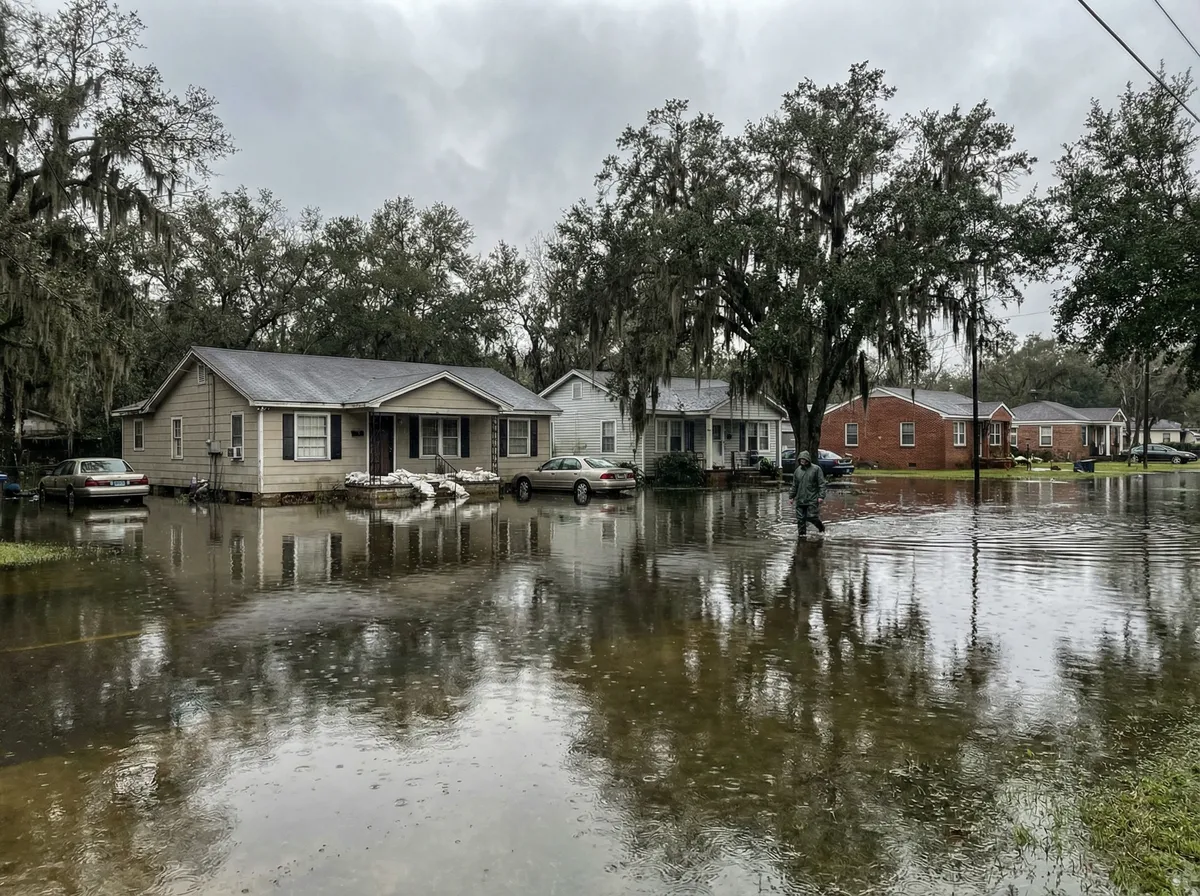
Flooding is Alabama's second-most common natural hazard, occurring on average every 12 days. The state averages over 50 flash flood events per year and receives 56 inches of annual rainfall. Three of the ten costliest hurricanes in U.S. history—Katrina, Rita, and Ivan—directly impacted Alabama, causing billions in flood damage.
Yet most Alabama homeowners either have no flood insurance at all, or they rely solely on the National Flood Insurance Program (NFIP) with its $250,000 building coverage limit. For homes worth more than $250,000—which includes a growing share of Alabama's housing market—the NFIP leaves a dangerous gap. This article explains that gap and the private flood insurance options that close it.
Why Standard Homeowners Insurance Does Not Cover Floods
This is the most common misconception in insurance: standard homeowners insurance does not cover flood damage. Period. This applies to every carrier, every policy type, and every state. The exclusion exists because flood damage is catastrophic and widespread—when a flood hits, it damages hundreds or thousands of homes simultaneously, making it financially impossible for standard insurance to absorb.
The distinction matters: if a tornado rips off your roof and rain pours in through the opening, that is wind damage (covered by homeowners insurance). If that same tornado causes a nearby creek to overflow and flood your home from the ground up, that is flood damage (not covered). Just one inch of floodwater can cause over $25,000 in damage to a home, according to FEMA.
The NFIP: What It Covers and Where It Falls Short
The National Flood Insurance Program (NFIP), administered by FEMA, has been the primary source of flood insurance since 1968. Alabama currently has more than 58,500 active NFIP policies providing over $12.3 billion in coverage. But the program has significant limitations:
| Feature | NFIP | Private Flood Insurance |
|---|---|---|
| Building coverage limit | $250,000 max | Up to $10 million |
| Contents coverage limit | $100,000 max | Up to $1 million+ |
| Contents valuation | Actual cash value (depreciated) | Replacement cost available |
| Additional living expenses | Not covered | Often included |
| Pool, deck, patio coverage | Not covered | Often included |
| Waiting period | Normally 30 days; specified exceptions apply | Insurer-specific waiting period and binding rules |
| Claims processing | Can be slow after major events | Generally faster |
The $250,000 Problem
The NFIP's $250,000 building coverage limit was set decades ago and has not kept pace with construction costs. If your Alabama home costs $350,000 to rebuild and you have maximum NFIP coverage, you are $100,000 short after a total flood loss. That gap comes out of your savings, your retirement, or a loan you will be repaying for years.
The Contents Problem
NFIP contents coverage maxes out at $100,000 and pays actual cash value—meaning depreciated value, not replacement cost. Your five-year-old $3,000 living room set might pay out $1,200. Your electronics, furniture, clothing, and kitchen items add up fast, and $100,000 in depreciated value often covers less than half of what it costs to replace everything.
The Living Expenses Problem
If a flood makes your home uninhabitable, the NFIP does not cover additional living expenses—hotel costs, restaurant meals, storage fees. You pay those out of pocket. Private flood policies often include ALE coverage, which can be worth $10,000-$50,000 or more during a prolonged displacement.
Private Flood Insurance in Alabama
The private flood insurance market in Alabama has grown significantly since 2020, offering competitive alternatives to the NFIP. Private carriers can provide:
- Higher coverage limits — up to $10 million for building coverage
- Replacement cost for contents — not depreciated actual cash value
- Additional living expenses — hotel, meals, and temporary housing
- Coverage for pools, decks, and patios — excluded by the NFIP
- Potentially lower premiums — especially for low-to-moderate risk properties
- Faster claims processing — not subject to FEMA's post-disaster backlog
Private flood insurance satisfies the mandatory purchase requirement for federally backed mortgages, so you can use a private policy instead of the NFIP if your lender requires flood insurance.
Excess Flood Insurance: Filling the Gap Above NFIP Limits
If you already have an NFIP policy and your home is worth more than $250,000, excess flood insurance fills the gap. An excess policy sits on top of your NFIP coverage and pays for damage that exceeds the NFIP's $250,000 building and $100,000 contents limits.
For example: Your home costs $400,000 to rebuild. You have maximum NFIP coverage ($250,000). An excess flood policy with $150,000 in additional building coverage would close the gap. Excess policies typically cost $500-$1,500 per year depending on your home's value and flood risk.
Alabama Flood Zones: Understanding Your Risk
FEMA designates flood zones based on risk level. Here is what the designations mean for Alabama homeowners:
| Zone | Risk Level | Insurance Required? | Typical Premium |
|---|---|---|---|
| A, AE, AH, AO, V, VE | High risk (SFHA) | Yes (if federally backed mortgage) | $1,200-$2,500+/year |
| B, X (shaded) | Moderate risk | Not required but recommended | $400-$700/year |
| C, X (unshaded) | Low risk | Not required but recommended | $400-$500/year |
Critical Fact
25% of all flood insurance claims occur outside of high-risk flood zones. Being in a "low risk" zone does not mean you will not flood. It means you have a lower probability of flooding in any given year—but over a 30-year mortgage, even a "low risk" property has a meaningful chance of experiencing a flood event.
FEMA Disaster Assistance Is Not a Substitute for Insurance
After every major flood, we hear homeowners say, "I did not have flood insurance, but FEMA will help me." Here is the reality:
- FEMA assistance is only available when the President declares a major disaster—not every flood qualifies
- The average FEMA disaster assistance payment is approximately $5,000-$10,000
- Most FEMA assistance comes as a low-interest loan that must be repaid
- Between 2000 and 2015, FEMA provided nearly $500 million in individual assistance for Alabama flood events—but that averages to a fraction of what each homeowner needed
- Insurance pays to rebuild your home and replace your belongings up to your policy limits
The math is simple: a flood insurance policy costing $400-$700 per year provides $250,000+ in coverage. FEMA assistance, if available at all, averages $5,000-$10,000 and must be repaid. Insurance is not optional—it is the only reliable way to recover from a flood.
Risk Rating 2.0: How NFIP Premiums Are Changing
FEMA's Risk Rating 2.0 methodology is fundamentally changing how NFIP premiums are calculated. Instead of basing rates primarily on flood zone maps, Risk Rating 2.0 considers individual property characteristics including:
- Distance to the nearest water source (river, creek, coast)
- Property elevation relative to flood levels
- Cost to rebuild the home
- Type of flooding the property faces (riverine, coastal, pluvial)
- Historical flood frequency in the area
For some Alabama homeowners, Risk Rating 2.0 is resulting in lower premiums. For others—particularly those near rivers, creeks, or the coast—premiums are increasing significantly. This makes it more important than ever to compare NFIP rates with private flood insurance options, as private carriers may offer better rates for your specific property.
Your Flood Insurance Action Plan
- Check your flood zone. Use FEMA's Flood Map Service Center to look up your property's flood zone designation. Even if you are in a low-risk zone, consider purchasing coverage.
- Get quotes from both NFIP and private carriers. As an independent agency, we can compare rates from multiple private flood insurers alongside the NFIP to find the best combination of coverage and price.
- Do not wait. NFIP policies normally have a 30-day wait, with specified exceptions. Private insurers set their own waiting periods and binding restrictions. Arrange coverage before a threat develops and confirm the effective date.
- Consider excess flood insurance if your home is worth more than $250,000 and you have an NFIP policy.
- Always purchase contents coverage. Many homeowners only insure the building and forget their belongings. Opt for replacement cost if available.
- Ask about additional living expenses. If a flood displaces you for months, ALE coverage pays for temporary housing.
- Invest in flood mitigation. Elevating your home, installing flood vents, and improving drainage can lower your premiums and reduce damage.
The Bottom Line
Alabama's flood risk is real and increasing. The state experiences flooding on average every 12 days, and 25% of flood claims occur outside of designated high-risk zones. The NFIP provides essential coverage, but its $250,000 building limit, actual cash value for contents, and lack of additional living expenses leave many Alabama homeowners underinsured.
Private flood insurance and excess flood policies close those gaps—often at competitive or lower prices than the NFIP. The key is to compare options, purchase coverage before you need it (check the waiting period and effective date), and make sure your limits reflect what it would actually cost to rebuild your home and replace your belongings.
Need help comparing flood insurance options? Call TCDS Insurance at (205) 847-5616. We will compare NFIP and private flood rates for your specific property and find the best coverage at the best price.
Compare NFIP vs. Private Flood Insurance
We will quote both NFIP and private flood options for your property and show you the coverage differences side by side. Most homeowners are surprised by how affordable private flood insurance can be.
Related Articles
Frequently asked questions
Does homeowners insurance cover flood damage in Alabama?
No. Standard homeowners insurance in Alabama explicitly excludes flood damage. This applies to all carriers and all policy types. Whether the flood is caused by a hurricane, heavy rain, a river overflowing, or a tornado-related storm surge, your homeowners policy will not pay for the damage. You need a separate flood insurance policy.
What is the difference between NFIP and private flood insurance?
The NFIP (National Flood Insurance Program) is a federal program with coverage limits of $250,000 for the building and $100,000 for contents. It pays actual cash value for contents and does not cover additional living expenses. Private flood insurance can offer higher limits (up to $10 million), replacement cost for contents, additional living expenses, and often faster claims processing.
How much does flood insurance cost in Alabama?
Costs vary by location and flood risk. In low-to-moderate risk zones, expect $400-$700 per year. In high-risk flood zones (Special Flood Hazard Areas), premiums range from $1,200 to $2,500+ per year. FEMA's Risk Rating 2.0 methodology is adjusting premiums to reflect individual property risk, which means some homeowners are seeing increases while others are seeing decreases.
Is flood insurance required in Alabama?
Flood insurance is federally required for homes in Special Flood Hazard Areas (high-risk zones) that have a mortgage from a government-backed lender. However, 25% of all flood claims occur outside of high-risk zones, so flood insurance is recommended for all Alabama homeowners regardless of flood zone designation.
Is there a waiting period for flood insurance?
NFIP policies normally have a 30-day waiting period. Exceptions can apply to qualifying mortgage transactions, certain renewal coverage increases, qualifying flood-map changes, and qualifying post-wildfire flooding. Private flood insurers set their own waiting periods and binding rules. Confirm the effective date before relying on coverage; buying a policy does not insure an existing loss.
What is excess flood insurance?
Excess flood insurance is a private policy that provides coverage above the NFIP's $250,000 building and $100,000 contents limits. If your home is worth more than $250,000, you need excess flood insurance to be fully covered. Excess policies typically cost $500-$1,500 per year depending on your home's value and flood risk.